
Cider Street

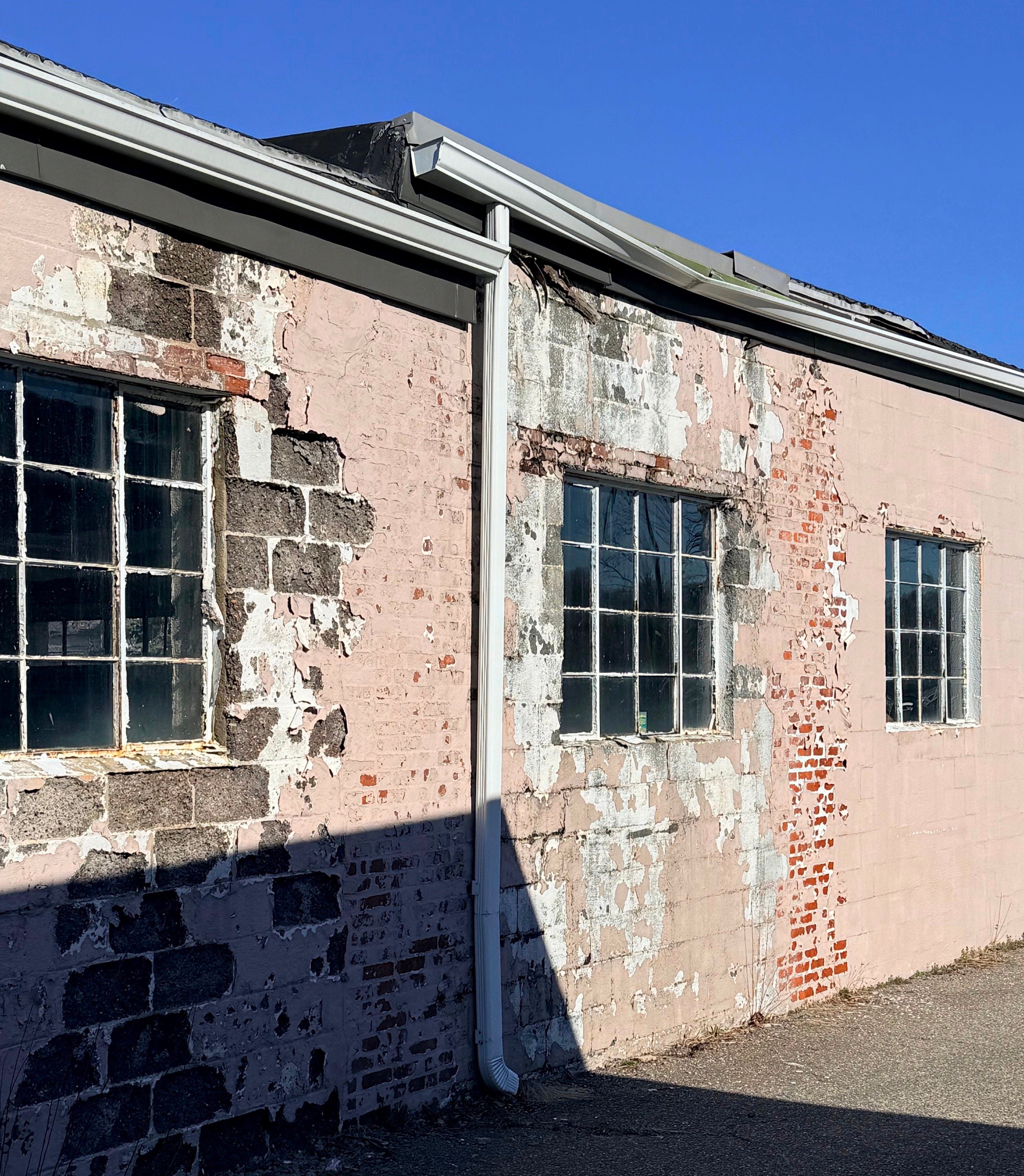
The building had been empty so long the town stopped agreeing and disagreeing on what it had been for.
Feed store, machine shop, temporary church, storage for seed, storage for nothing. The wall kept pieces of each version. Pink plaster. Red brick. Black block. Three tall windows with old panes that caught the sky wrong. And on the corner, a white gutter so new it looked borrowed from the set of infomercial.
Nina passed it every morning on her way to open the laundromat. Before she turned the sign to OPEN, she always checked the coin tray twice, then looked out across the alley. A worn-in habit by now. Most days the old building was only a wall in winter light, half lit, half cut off by shadow. But she looked anyway. Had to. Habit.
The first thing she noticed was the gutter.
It had appeared sometime in the fall. Clean brackets. Straight seams. Fresh downspout dropping to the pavement. The rest of the roof dipped in the middle like a tired back. Nobody in town claimed to know who had paid for it or even seen it get strapped on. That was odd, though not odd enough to keep anyone up.
The chalk came later.
A square near the middle window. Then three numbers written low on the exposed brick, all at the same height, neat as figures in a ledger.
14, 9, 3.
Rain washed them off by Saturday. On Monday they were back, in the same place, written with the same dry precision.
Nina asked Leon at the hardware store. He came over after lunch, stood in the alley with his hands in his coat pockets. Said it was probably kids. But the handwriting bothered him. You could tell because he leaned in without meaning to.
A week later, the center window was open a little.
Not much. Two inches, maybe less. Just enough to break the straight line of the frame. Nina was sure it had been shut the day before. She noticed things like that. She spent her life waiting on machines, and waiting made a person exact.
After work one day she crossed the alley with a flashlight. Her light found blistered paint, crumbling mortar, and the white downspout. Inside there was only rafters and black air.
Then she heard the chalk.
A slow, deliberate drag. Chalk moving across brick.
She rushed out and ran home.
By morning the numbers had changed.
14, 9, 2.